The Ultimate Homeowner Toolbox: Top 10 Essential Tools Every Homeowner Should Own
Purchasing a home is one of the most significant investments you will ever make. Along with the pride of ownership comes the inevitable reality of maintenance and repairs. From tightening a loose cabinet hinge to hanging a heavy gallery wall, tasks will constantly arise that require more than just your bare hands. Relying on a landlord is no longer an option, and calling a professional handyman for every minor tweak quickly becomes an expensive habit.
Building a reliable, high-quality toolbox is the first step toward self-reliance as a homeowner. You do not need to invest thousands of dollars in commercial-grade power equipment right away. Instead, focusing on a core group of versatile, durable hand and power tools will prepare you for the vast majority of common household tasks.
Below is the definitive list of the top 10 items every homeowner should have in their toolbox, along with guidance on why they are indispensable and how to choose the right one.
1. The Claw Hammer
A high-quality claw hammer is the quintessential tool for any household. It serves two primary functions: driving nails into surfaces using the flat head and prying them out using the curved claw. Beyond basic carpentry, a hammer is essential for assembling furniture, hanging artwork, and light demolition work.
When selecting a hammer, look for a 16-ounce model with a forged steel head. This weight provides enough force for standard household projects without causing excessive arm fatigue. Avoid cheap hammers with wooden handles that can snap or loose heads that pose a safety hazard. Instead, opt for a solid steel or fiberglass handle covered with a textured, shock-absorbing rubber grip. This design minimizes the vibration transferred to your wrist and ensures the tool lasts for decades.
2. A Versatile Screwdriver Set
Loose screws are a universal household nuisance. They can be found on doorknobs, kitchen cabinets, light switch plates, and electronic devices. Attempting to use the wrong size or type of screwdriver will strip the screw head, turning a simple five-minute fix into a frustrating ordeal.
A complete screwdriver set should include various sizes of both Phillips (cross-shaped) and flathead (slotted) drivers. Stubby screwdrivers are excellent for tight spaces, such as inside cabinetry, while long-shafted drivers provide extra reach. Alternatively, you can purchase a high-quality multi-bit ratcheting screwdriver. This space-saving option features a hollow handle that stores dozens of interchangeable bits. The ratcheting mechanism allows you to turn the screw continuously without lifting the tip from the screw head, saving time and reducing hand strain.
3. A Durable Tape Measure
Accurate measurement is the foundation of every successful home project. Whether you are checking if a new sofa will fit through the front door, measuring windows for blinds, or calculating the square footage of a room for new flooring, a reliable tape measure is critical.
For standard residential use, a 25-foot tape measure with a 1-inch-wide blade is the industry standard. The wider blade prevents the tape from bending or collapsing when extended over long distances without a helper. Look for a model that features a robust locking mechanism, clear and easy-to-read markings, and a durable, impact-resistant housing that can survive accidental drops onto concrete garage floors.
4. An Adjustable Wrench
Plumbing fixtures, bicycles, lawnmowers, and outdoor furniture all rely on nuts and bolts to hold them together. While a full socket set is a wonderful addition to a workshop, a single adjustable wrench can handle a wide variety of bolt sizes in a pinch.
Often referred to as a Crescent wrench, this tool features a thumbwheel screw that adjusts the width of the jaw. This adjustability allows it to lock onto both metric and standard fasteners. A 10-inch adjustable wrench provides the ideal balance between leverage and maneuverability. When using an adjustable wrench, always ensure the movable jaw is facing the direction of the rotation to prevent the tool from slipping and rounding off the edges of the bolt.
5. Slip-Joint and Needle-Nose Pliers
Pliers extend your grip and allow you to hold, twist, bend, and cut objects with precision. A well-rounded toolbox should include at least two distinct types of pliers: slip-joint pliers and needle-nose pliers.
Slip-joint pliers feature an adjustable pivot point that allows the jaws to open wider for gripping thicker pipes or bolts. They are perfect for holding a nut in place while you turn a screw from the other side. Needle-nose pliers have long, tapered jaws designed for working in cramped spaces. They are invaluable for electrical tasks, such as bending wire loops around terminal screws, or pulling dropped objects out of tight crevices. Look for pliers with insulated, comfortable rubber grips to ensure a secure hold.
6. A Cordless Drill and Driver Bit Set
While hand tools are necessary for precision, a cordless drill is the ultimate time and labor-saving power tool for a homeowner. From boring holes into wall studs to driving hundreds of screws during a deck repair, a cordless drill transforms grueling manual labor into an effortless task.
A 18-volt or 20-volt brushless cordless drill offers the best combination of power, battery life, and longevity for residential applications. Modern lithium-ion batteries hold their charge for months when not in use, meaning the drill will be ready to work whenever you are. Pair your drill with a comprehensive accessory kit containing both wood/metal drill bits and a wide selection of driving bits.
7. A Digital or Bubble Torpedo Level
Nothing ruins the aesthetic of a home faster than crooked shelving, lopsided mirrors, or unlevel appliances. A washing machine that is not perfectly level will vibrate violently during the spin cycle, causing premature wear and annoying noise.
A compact 9-inch or 12-inch torpedo level is highly portable and fits easily into any toolbox drawer. It features small glass vials filled with liquid and a single air bubble. When the bubble rests precisely between the two center lines, your project is perfectly horizontal (level) or vertical (plumb). Many modern torpedo levels feature magnetic edges, allowing you to attach them directly to metal studs or pipes for hands-free operation.
8. A Utility Knife
Often called a box cutter, a heavy-duty utility knife is one of the most frequently used items in a homeowner’s arsenal. It easily outperforms standard kitchen scissors when cutting through tough materials like thick cardboard boxes, carpeting, drywall, rope, and plastic packaging.
Select a utility knife with a retractable blade mechanism for safety, as keeping a sharp blade exposed in a toolbox is an invitation for injury. Many premium models feature a tool-free blade change system and built-in storage within the handle for replacement blades. Always replace the blade as soon as it becomes dull; a sharp blade cuts cleanly with minimal pressure, whereas a dull blade requires excessive force and is more likely to slip and cause an accident.
9. A Sturdy Flashlight or Headlamp
Home repairs rarely happen under ideal lighting conditions. You will often find yourself tracking down a water leak inside a dark crawlspace, resetting a tripped circuit breaker in a pitch-black basement, or working under the kitchen sink.
While your smartphone flashlight works in an emergency, it is difficult to position correctly and drains your phone battery. A dedicated, high-lumen LED flashlight or a hands-free LED headlamp is far superior. A headlamp is particularly useful because it casts light directly into your line of sight while leaving both of your hands completely free to operate your tools safely.
10. A Durable Tool Storage Box or Bag
Having the best tools in the world does you no good if you cannot find them when an emergency strikes. A dedicated storage container keeps your investment organized, protected from moisture, and easily portable.
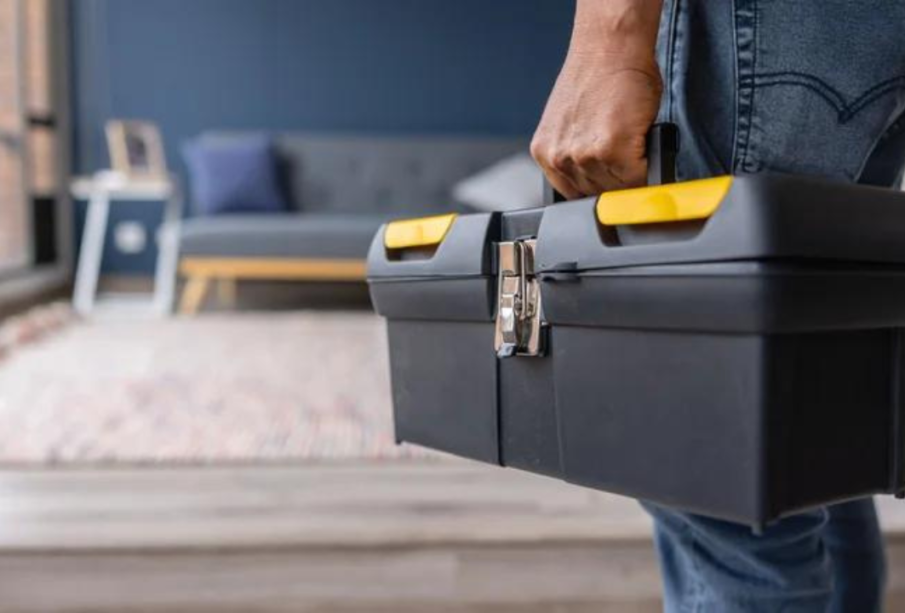
You can choose between a traditional hard-sided plastic or metal toolbox, or a modern heavy-duty canvas tool bag. Canvas bags are highly popular because they feature dozens of specialized interior and exterior pockets, making it easy to categorize small items like pliers and screwdrivers. Ensure whatever option you choose has a comfortable handle and a rugged latching or zipper system to prevent accidental spills while carrying it across the house.
Frequently Asked Questions
What is the difference between a drill and an impact driver, and do I need both?
A standard cordless drill is designed to bore holes and drive screws using a steady rotational force, and it features an adjustable clutch to control torque. An impact driver uses both rotational force and rapid concussive downward blows to drive large fasteners into dense materials without stripping them. For basic home maintenance, a standard cordless drill is more than sufficient because it is highly versatile. You only need to add an impact driver if you plan to take on large-scale construction projects like building a wooden deck or an outdoor shed.
How do I maintain my hand tools to prevent them from rusting in a garage?
Rust occurs when moisture in the air reacts with the steel components of your tools. To prevent this, always wipe your tools down with a clean, dry microfiber cloth after use to remove sweat, dirt, or grease. Periodically apply a light coating of a multi-purpose machine oil or a specialized rust inhibitor to the metal surfaces. Additionally, placing a silica gel packet or a piece of standard blackboard chalk inside your toolbox will help absorb any ambient moisture that enters the container.
Why does the width of a tape measure blade matter so much?
The width of a tape measure blade directly dictates its standout capability, which is the distance the tape can be extended horizontally into the air before it buckles and bends. A cheap, narrow tape measure will collapse after three or four feet, forcing you to have a second person hold the other end. A high-quality tape measure with a one-inch wide blade can easily stand out eight to ten feet, allowing you to take long, accurate measurements completely by yourself.
Is it safe to use standard hand tools for basic household electrical work?
Standard hand tools with basic plastic or rubber handles are not rated to protect you from electrical shocks. If you are doing any electrical work, such as replacing a wall outlet or a light fixture, the absolute first step must always be turning off the power at the main circuit breaker panel and verifying the line is dead using a non-contact voltage tester. If you plan to work on live or potentially live wires, you must purchase specialized, certified insulated tools rated for up to 1,000 volts.
What does the term torque mean when using a cordless power drill?
Torque refers to the rotational turning force generated by the drill motor. Most modern cordless drills feature an adjustable clutch ring with numbers printed on it near the chuck. Setting the drill to a lower number reduces the torque, causing the drill to stop spinning when it encounters resistance. This prevents you from driving a screw too deep into fragile materials like drywall. Higher numbers provide maximum torque, which is necessary for drilling through dense hardwoods or metals.
Can I use an adjustable wrench on plumbing pipes, or do I need a pipe wrench?
An adjustable wrench is designed to turn flat-sided hexagonal fasteners, such as the nuts found on supply lines under a sink. It should not be used on smooth, round plumbing pipes. A pipe wrench features hardened, serrated teeth that are designed to bite into soft iron or steel pipes to grip them securely. Using an adjustable wrench on a round pipe will simply slip, scratching the metal and potentially warping the pipe without loosening the connection.