Managing Your Perth Pool During Water Restrictions and Drought Conditions
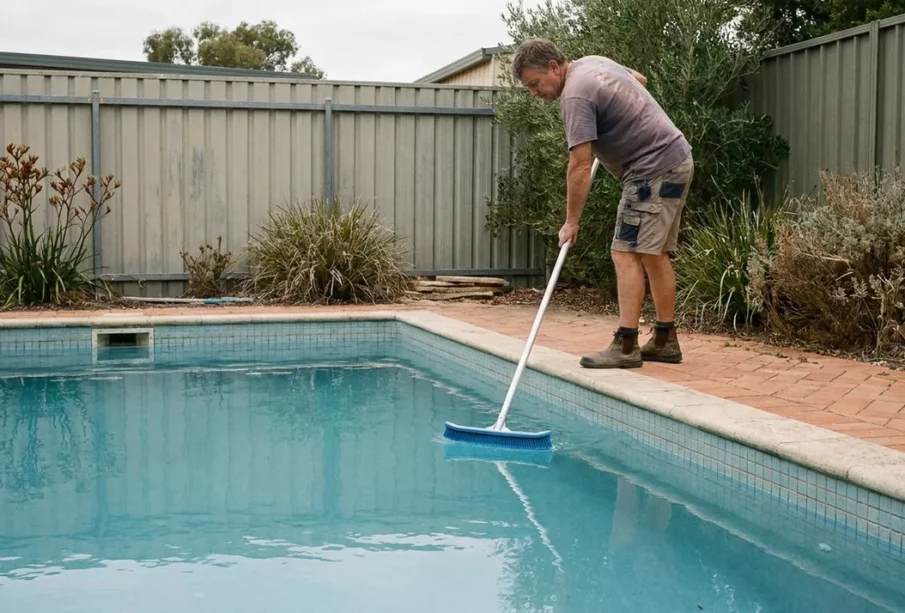
Water is not an unlimited resource in Perth. The Perth metropolitan region sits on one of the drier corners of one of the driest inhabited continents, and the water security challenges that Perth has managed for decades have been addressed through a combination of major infrastructure investment in desalination and groundwater, increasingly stringent Water Corporation usage restrictions, and a growing community awareness of the value and scarcity of fresh water.
For pool owners, water restrictions create a specific set of management challenges. A pool is a significant volume of water, typically 40,000 to 70,000 litres for a residential pool, that evaporates over the Perth summer at a rate that requires regular top-up. Managing this top-up responsibly during water restriction periods requires understanding what the restrictions actually allow, how to minimise the pool’s water consumption, and how to maintain water quality effectively with less water input.
The good news for Perth pool owners is that responsible pool water management and water conservation are not in conflict. The practices that most effectively reduce pool water consumption, principally the use of a pool cover to minimise evaporation, also improve chemical efficiency, reduce heating costs, and in most cases improve pool water quality by reducing the dilution-driven chemical demand of frequent top-ups.
Understanding Perth’s Water Restriction Framework for Pools
Water Corporation of WA manages water restrictions in the Perth metropolitan area, and these restrictions have specific provisions that apply to pool and spa filling and top-up.
The Water Corporation’s restriction framework typically allows pool top-up for maintenance purposes but places restrictions on new pool filling and on the volume of top-up water that can be used. The specific provisions and restriction levels that are current at any given time are detailed on the Water Corporation website and may change in response to dam storage levels and seasonal conditions.
Key points that Perth pool owners should understand about the restriction framework:
New pool filling. Filling a newly constructed or newly renovated pool with scheme water typically requires a permit from the Water Corporation, even during restriction periods. The permit process ensures that large-scale water uses are tracked and that alternative sources are considered where available.
Maintenance top-up. Top-up of existing pools to replace evaporation losses is generally permitted under restriction conditions, but the restrictions may specify watering hours, days, or methods that affect when this top-up can occur.
Permitted water sources for pool filling. The Water Corporation’s framework distinguishes between scheme water and alternative sources. Bore water, rainwater tank water, and treated wastewater are all governed by specific rules about their use for pool filling and top-up that differ from the scheme water restrictions.
Pool covers and restriction compliance. In some restriction frameworks, the use of a pool cover may be a condition of permitted pool top-up or may reduce the allowable top-up volume by requiring the pool to be covered during restriction periods.
Pool owners who are uncertain about the current restrictions applicable to their pool should check directly with the Water Corporation of WA, whose website provides current restriction information and contact details for clarification of specific circumstances.
Minimising Pool Evaporation: The Most Effective Conservation Measure
The pool cover is the single most effective water conservation measure available to Perth pool owners, and it addresses the primary mechanism through which a pool loses water during Perth’s hot, dry summer.
Evaporation from an uncovered pool in Perth summer conditions can exceed 25 to 50 millimetres of water depth per week during peak heat, equivalent to 1,250 to 2,500 litres per week for a 50 square metre pool surface. Over a summer season, an uncovered pool in Perth may lose the equivalent of one to two complete pool volumes to evaporation, all of which must be replaced.
A quality pool cover, whether a solar blanket, a thermal cover, or a rigid automatic cover system, reduces evaporation by 90 to 95 percent by eliminating the exposed water surface during periods when the pool is not in use. For a pool covered whenever it is not being used, the weekly water loss can be reduced from 2,000 litres to 100 to 200 litres, a dramatic reduction in both water consumption and the frequency of top-up required.
The water conservation benefit of a pool cover also translates into direct cost savings:
- Less scheme water consumed through top-up, reducing water bills
- Reduced chemical consumption, because the dilution effect of frequent large top-ups is eliminated
- Reduced heating costs for heated pools, because the cover retains heat that would otherwise be lost through evaporation
- Less top-up water means that the pool’s total dissolved solids accumulate more slowly, extending the interval before partial drain and refill is needed
For Perth pool owners who do not currently use a pool cover, investing in one is the most impactful single action available for responsible pool water management.
Bore Water for Pool Top-Up: What Perth Owners Need to Know
Many Perth properties have access to a water bore for garden irrigation. Using bore water for pool top-up and for new pool filling is permitted under certain conditions and can significantly reduce the demand on scheme water. However, bore water in Perth often has specific characteristics that affect pool chemistry management in ways that pool owners need to understand.
Bore water mineral content. Perth bore water varies in its mineral content by location, but many bore water sources in the metropolitan area have elevated iron, manganese, and calcium hardness levels compared to scheme water. Iron and manganese in pool water cause staining of pool surfaces and equipment. Calcium hardness above the target range accelerates scale formation.
Before using bore water for pool top-up, a water test that includes iron, manganese, and calcium hardness is worthwhile. Bore water with high iron or manganese may require treatment before addition to the pool, or may limit the amount of bore water that can be added without causing staining problems.
Bore water pH. Perth bore water is often acidic, with a pH below 7. Adding large volumes of acidic bore water to a pool requires pH correction after addition. Failing to correct the pH after bore water top-up can result in periods of low pH that are corrosive to pool surfaces and equipment.
Bore water algae and biological content. Bore water may contain organic matter and biological content that adds to the pool’s chemical demand on addition. A chlorine shock treatment following significant bore water top-up is prudent to address any biological content introduced.
For Perth pool owners who use bore water, having the bore water tested and understanding its specific characteristics before making it a regular part of the pool management programme provides the information needed to manage the chemical implications correctly.
Water-Efficient Pool Equipment Selection
Beyond the pool cover and water source management, the selection and operation of pool equipment has implications for water consumption that are worth understanding.
Backwash water management. Sand filter backwashing, which is necessary to maintain filter performance, uses a significant volume of water that is discharged to waste. Standard backwash cycles use several hundred litres of water. During restriction periods, minimising unnecessary backwashing by backwashing only when the filter pressure genuinely requires it rather than on a fixed schedule reduces this water loss.
Some pool owners direct backwash water to garden areas rather than to the drainage system, reducing the net water loss from the pool system. This is appropriate provided the backwash water does not contain chemical concentrations that would damage garden vegetation, which requires testing before this practice is established.
Cartridge filter water efficiency. Cartridge filters are cleaned by removing the cartridge and rinsing it with a hose rather than through a backwash cycle. The water used in cartridge cleaning is typically less than a sand filter backwash, and cartridge filter cleaning can be done over a lawn or garden area to minimise water waste.
Variable speed pump energy and water efficiency. The connection between pump speed and pool water balance is indirect but real. A pool that is not adequately circulated develops chemical distribution problems that may require more chemical treatment and potentially more water replacement than a well-circulated pool. Quality variable speed pool pumps that maintain adequate circulation efficiently contribute to stable water chemistry that reduces the need for water replacement as a corrective measure.
Chemical Management During Low-Top-Up Periods
When pool top-up is minimised through cover use and water-efficient practices, the pool’s total dissolved solids (TDS) accumulate more rapidly because the dilution effect of frequent top-ups is reduced. Managing this accumulation requires periodic testing and, when TDS reaches the upper end of the acceptable range, partial drain and refill to reset the baseline.
The acceptable TDS range for most residential pools is below 1500 to 2000 parts per million, with the specific upper limit depending on the pool’s salt chlorinator specification (if applicable) and the pool surface type. Regular TDS testing, at least monthly during the swimming season, allows the pool owner to monitor accumulation and plan a partial drain and refill when needed rather than discovering a TDS problem through deteriorating water quality.
A partial drain of 20 to 30 percent of the pool volume, followed by refill, resets the TDS to a comfortable level and restores the water’s receptiveness to chemical treatment. This is a controlled water use that is appropriate under most restriction frameworks as a maintenance requirement, distinct from the top-up water that replaces evaporation.
For Perth pool owners who want professional guidance on managing their pool’s water chemistry efficiently during restriction periods, engaging a pool service specialist for periodic water analysis provides the data-driven approach to chemical management that is more water-efficient than reactive problem treatment.
Conclusion
Responsible pool water management during Perth’s periodic water restriction periods is achievable without compromising pool water quality or the enjoyment of the pool as a household amenity. The practices that conserve water most effectively, principally the consistent use of a pool cover and the careful management of top-up water sources, are the same practices that improve chemical efficiency, reduce running costs, and in many cases improve pool water quality.
Perth’s water security situation makes water-conscious pool management a genuine community responsibility alongside a regulatory one. The pool owners who approach this responsibility with the knowledge to manage their pool efficiently contribute to the broader water conservation effort while maintaining a pool that is a genuine pleasure to use.